In August, I had the honour of speaking with Griffin, a 2/4 Splenic Projector with a well-defined Ego centre, on The Seidrkin Podcast. We dove deep into both of our lived experience as Ego beings — and if you’ve ever wondered what it really means to live with a defined Ego in Human Design, this conversation is for you.
🎧 Watch the full podcast on YouTube here
🎧 Listen on Spotify here
IS IT BAD HAVING AN EGO? WHAT IS THE EGO?
What Is the Ego Centre in Human Design?
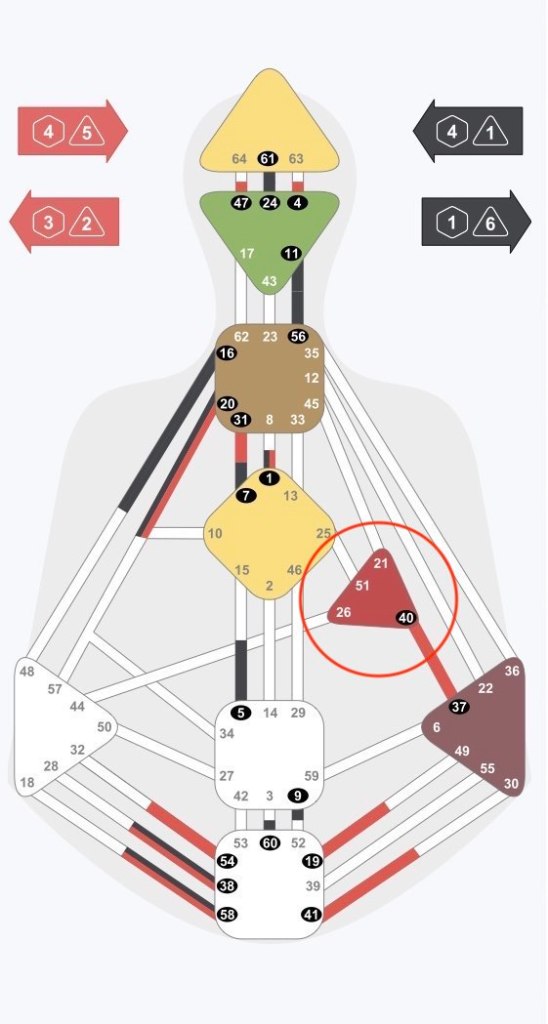
In Human Design, the Ego (also known as the Heart or Will Centre) is one of the nine centres in the bodygraph. You’ll spot it as the small triangle on the chart.
- If it’s white, your Ego is undefined.
- If it’s coloured in, your Ego is defined.
Around 63% of the population has an undefined Ego, and only 37% have a defined Ego.
This centre governs both the biological heart muscle and themes of willpower, value, and self-worth.
- An undefined Ego often wrestles with the not-self voice of “I need to prove my worth.”
- A defined Ego carries consistent willpower and an intrinsic sense of worth (at least in theory).
The Evil Ego
Is the Ego Really “Bad”?
In spiritual and self-development spaces, we often hear about the “ego” as something to overcome or transcend. But in Human Design, that advice can be misleading.
Much of what people describe as the “bad ego” is actually the distortion of an undefined Ego trying to prove itself.
If your Ego is defined, trying to transcend it is like trying to cut out a vital part of your own design. You may even succeed because you have access to willpower — but at what cost to your heart health, your vitality, and your sense of self?
The Tribal Heart: Love and Resources
During the podcast, Griffin and I spoke about the deeper essence of the Ego: a profoundly tribal energy rooted in love, devotion, and empowerment.
This centre is about more than willpower or achievement. It’s about resources, provision, and proving oneself for the sake of our people. When Ego beings (and even undefined Egos) understand this, they can step into the true glory and purpose of this little centre.
Tall Poppy Syndrome And Devotion To Playing Small
In Australia and New Zealand, there’s a phrase: “tall poppy syndrome.” It describes the cultural pressure to cut yourself down to size so others don’t feel threatened by your success.
I first heard about Ego distortion from another Splenic Projector with a defined Ego, Travis Day, who described it as being “devoted to being worthless” (my paraphrasing as I remember it). That struck me deeply.
As someone who has lived with a defined Ego, I realised I had spent much of my life suppressing my own worth and power, trying to stay small so I wouldn’t stand out.
Deconditioning gave me glimpses of the confidence and willpower that had always been available to me, but which I had often buried or misused.
The Tyrannical Shadow Of A Defined Ego
Here’s the shadow side: having access to consistent willpower without awareness can be more harmful than not having it at all.
Personally, I used my willpower to bulldoze myself through extreme choices — three years of raw veganism, two years of carnivore, several years in a toxic relationship. I stuck with them not because they were healthy, but because I had the sheer will to see them through.
The other shadow? Expecting others to live up to the same standard of determined grit.
Griffin shared his frustration in the school system, struggling to understand why colleagues couldn’t simply show up on time or get things done the way he could. But here’s the truth: an undefined Ego isn’t designed to follow through the way a defined Ego can.
When undefined Egos make commitments without aligning to their Strategy and Authority, it can lead to broken promises, burnout, and a wounded sense of self-worth.
How to Work with Your Ego (Defined or Undefined)
So, how do you avoid “poking yourself in the eye” with your own willpower?
- If you have a defined Ego:
- Notice when you’re bulldozing yourself or others.
- Ask: Is this willpower in service to my people, my heart, and my health?
- Honour your drive, but don’t weaponise it.
- Most importantly if the Ego isn’t you inner authority, make sure it bends the knee to what IS your inner authority. This keeps the devotion healthy. In my case this means following my emotional process, in Griffins case it means obeying his spleen.
- If you have an undefined Ego:
- Release the pressure to prove yourself, you’re not here for that game.
- Make commitments only when aligned with your Strategy and Authority.
- Remember: your worth isn’t measured by promises kept or goals achieved.
Final Thoughts
The Ego centre is often misunderstood. It’s not the “enemy” of spiritual growth — it’s a source of heart, devotion, and empowerment when used with awareness.
Whether your Ego is defined or undefined, the medicine is the same: honour your design, recognise your patterns, and let love (and your inner authority) — not distortion — guide your willpower.
✨ What’s your relationship with your Ego centre? Do you notice yourself trying to prove or to suppress your worth?
Share in the comments — I’d love to hear your experience.
Check out the EGO podcast on
 Seidrkin
Leave a comment